


Onchain vaults have grown faster than the governance frameworks around them. While institutional interest in tokenised funds and onchain credit is no longer theoretical, capital allocation still hinges on familiar asset management tests: clear ownership, independent valuation, reliable liquidity and enforceable accountability.
Those questions anchored Laser Digital's inaugural Frontier Capital Summit, held at Nomura's offices at One Angel Lane in London on 9 November 2026. Hosted by Andrea Vianelli, COO, Asset Management and Strategic Advisory at Laser Digital, the programme brought together institutional allocators, asset managers, issuers, legal practitioners and infrastructure builders across five sessions tracing the lifecycle of a vault from origination to regulation.
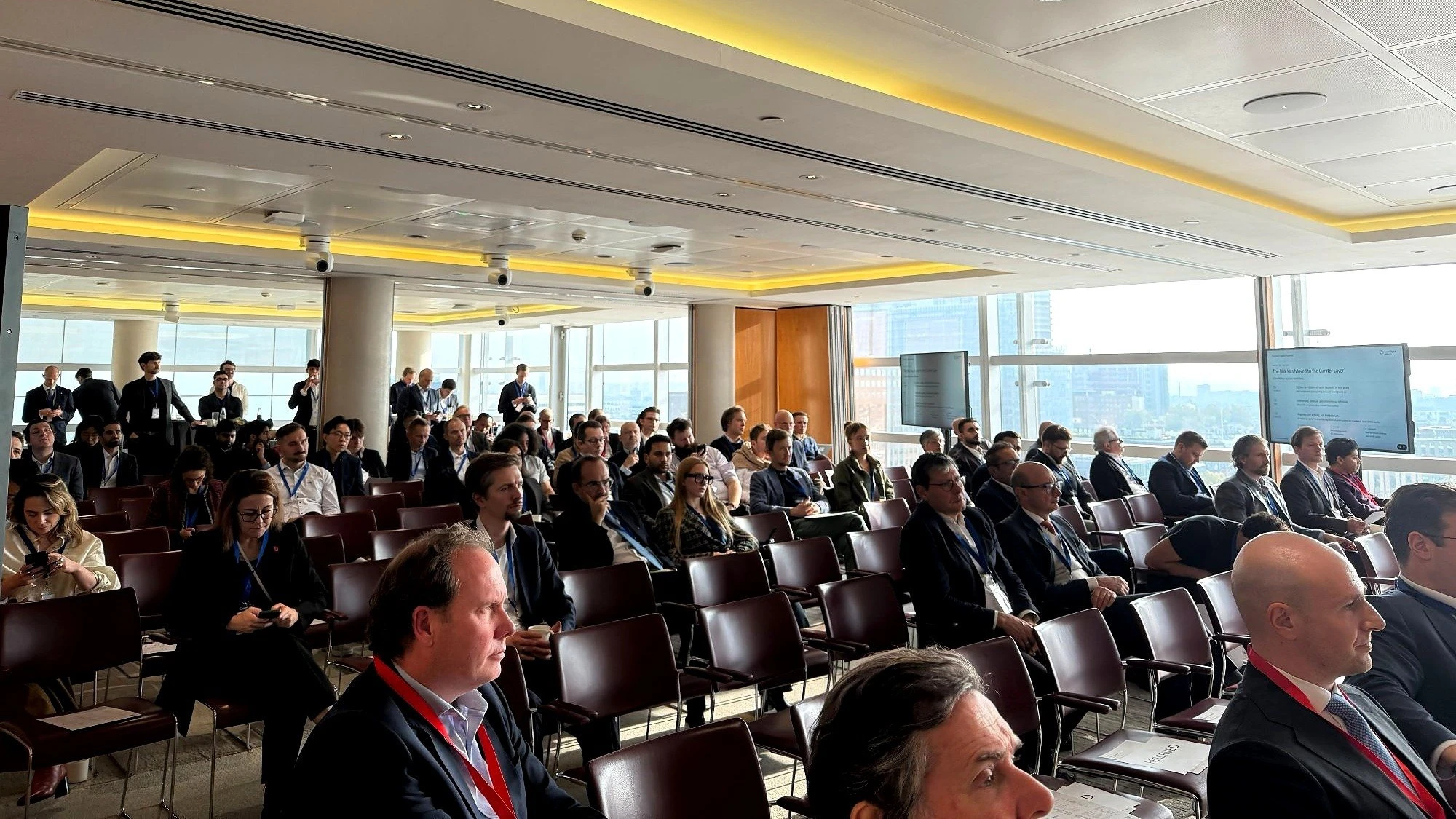
Opening addresses: safeguards and accountability
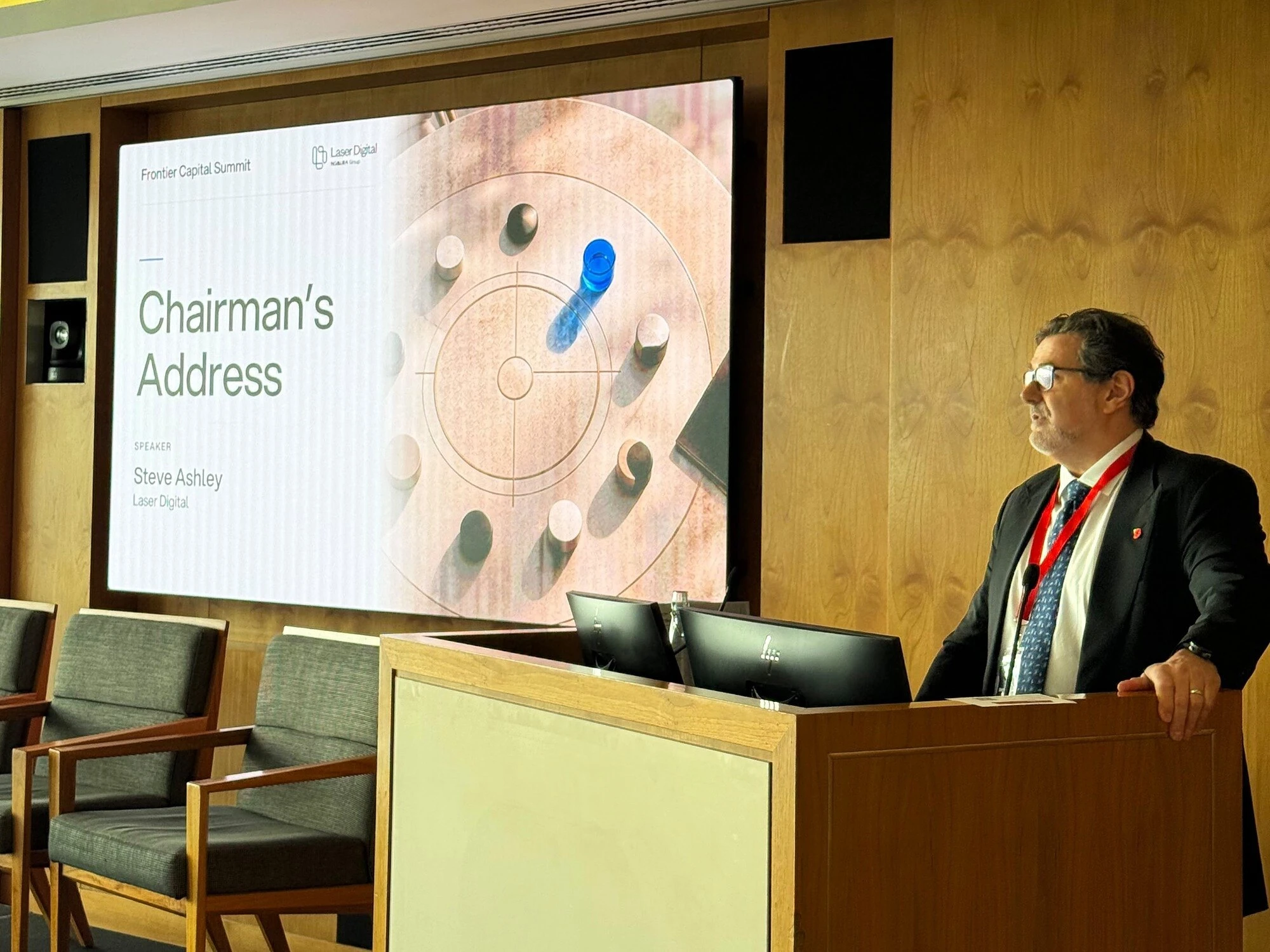
Opening the afternoon, Co-Founder and Executive Chairman Steve Ashley framed onchain vaults as an asset management discipline first and a technology story second. Transparency onchain does not cure poor portfolio construction, he noted, nor does a tradeable token make an illiquid underlying asset liquid on demand. That distinction set the central test for the day: "What does the investor actually own and what underpins its value?" For Laser Digital, the answer rests on a single principle: "Institutional technology requires institutional safeguards."
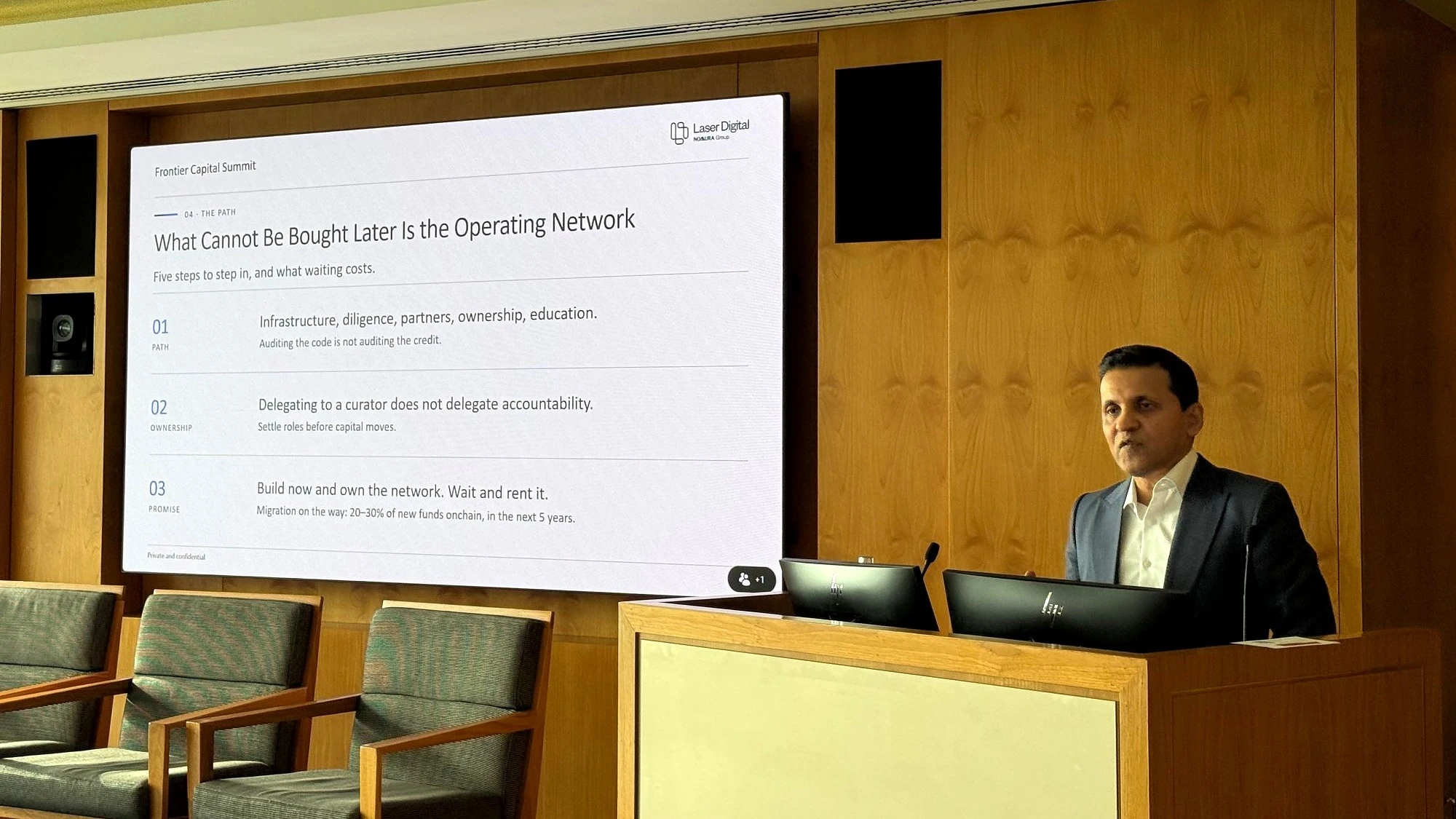
Co-Founder and CEO Dr Jez Mohideen examined how risk has shifted as vaults have matured. The primary exposure no longer sits solely in base protocol code, he argued, but at the curation layer, and accountability must sit there with it. He outlined Laser Digital's phased approach toward becoming one of the first regulated curators of real-world asset vaults, beginning with advising third-party issuers and platforms on their risk frameworks. Building those operating links early matters, he added: "What cannot be bought later is the operating network."
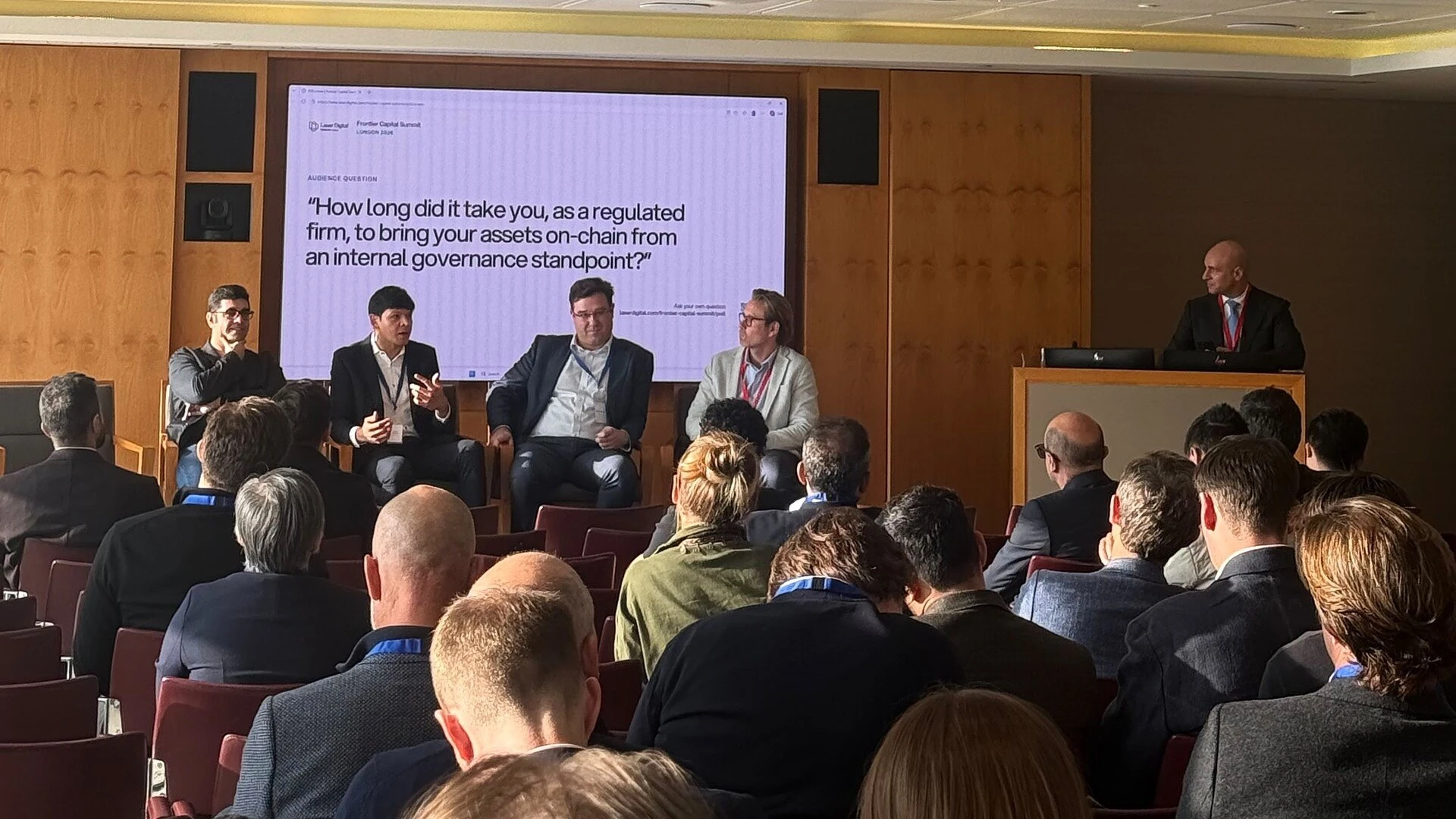
Session 1: Vault curation, origination and distribution
The opening panel, moderated by Adam Duritza, Global Head of Asset Management at Laser Digital, with Milko Pavlov (Managing Director, Houlihan Lokey), David Vatchev (Head of Tokenization, Fasanara Capital) and Abdul Rafay Gadit (Co-Founder, ZIG Finance), focused on what justifies bringing a strategy onchain in the first place.
Vatchev argued that tokenisation only makes sense where it solves a concrete problem better than an offchain fund structure, while Pavlov emphasised that independent valuation of the underlying portfolio remains non-negotiable regardless of wrapper. Discussion also turned to who bears responsibility when a vault underperforms, and the tension between private credit cashflows and DeFi's expectation of instant liquidity. Wrapping poor assets in smart contracts does nothing to improve their credit quality, Gadit noted:
"People think that if you put a questionable asset onchain it will suddenly become investable, and I think that's the biggest myth."Abdul Rafay Gadit, Co-Founder, ZIG Finance
Session 2: Vault strategies and liquidity
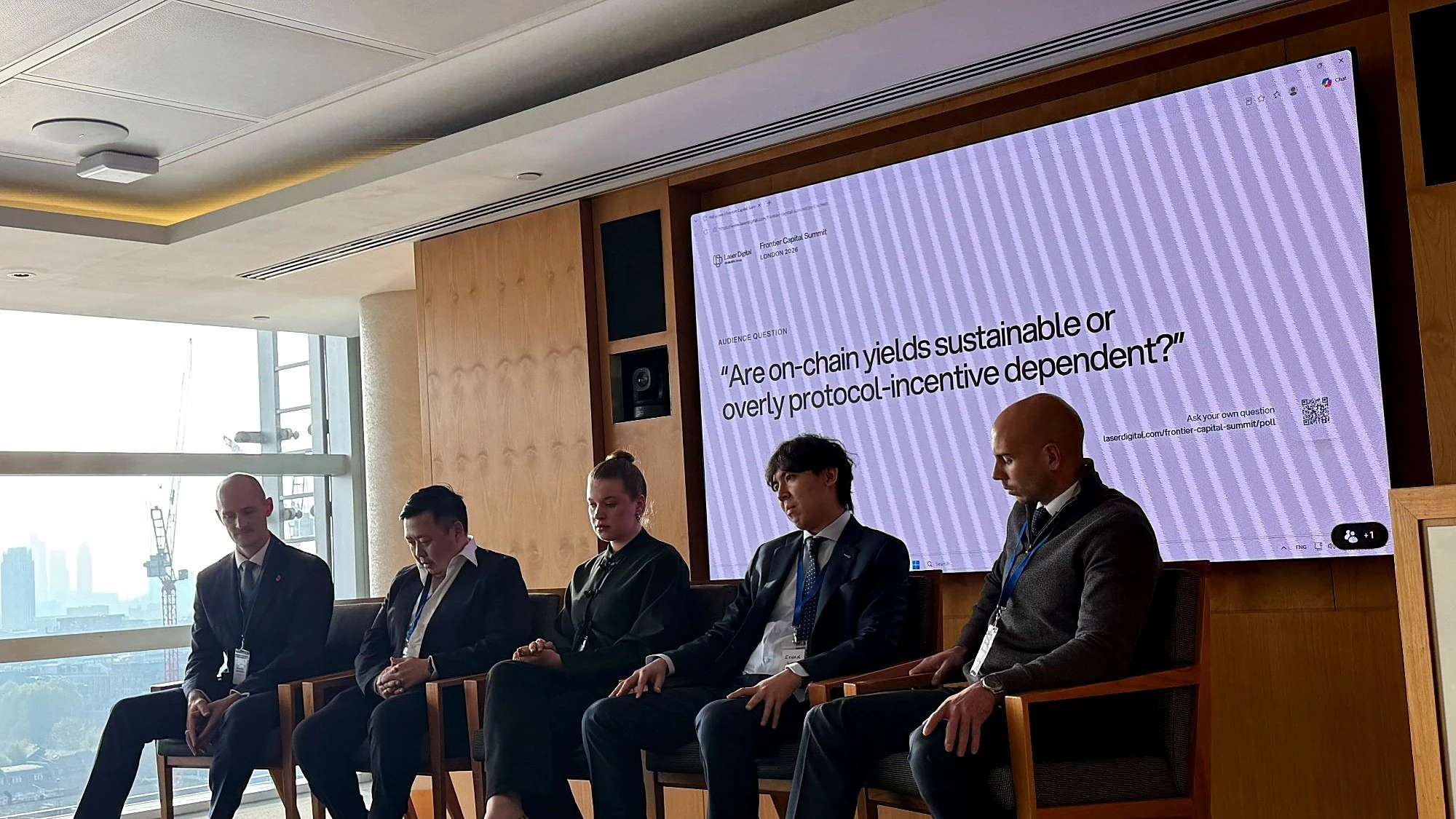
In the second session, Keyring Network Founder Alex McFarlane led a discussion with Darren Camas (CEO, IPOR Labs), Alexandra Kugusheva (Growth Lead, Morpho), Ethan Luc (Head of Growth, Upshift) and Anthony Fernandez (Institutional Business Development, Kamino) on how vault strategies hold up once token incentives fade.
Across the panel, liquidity, rather than headline strategy design, emerged as the main constraint on scaling institutional vaults. On distribution, Luc noted a clear shift in how partners evaluate onchain products: "In the payments market, we're definitely seeing less pay to play and more fundamental analysis about what value we're actually bringing."
Session 3: Asset tokenisation and vault infrastructure
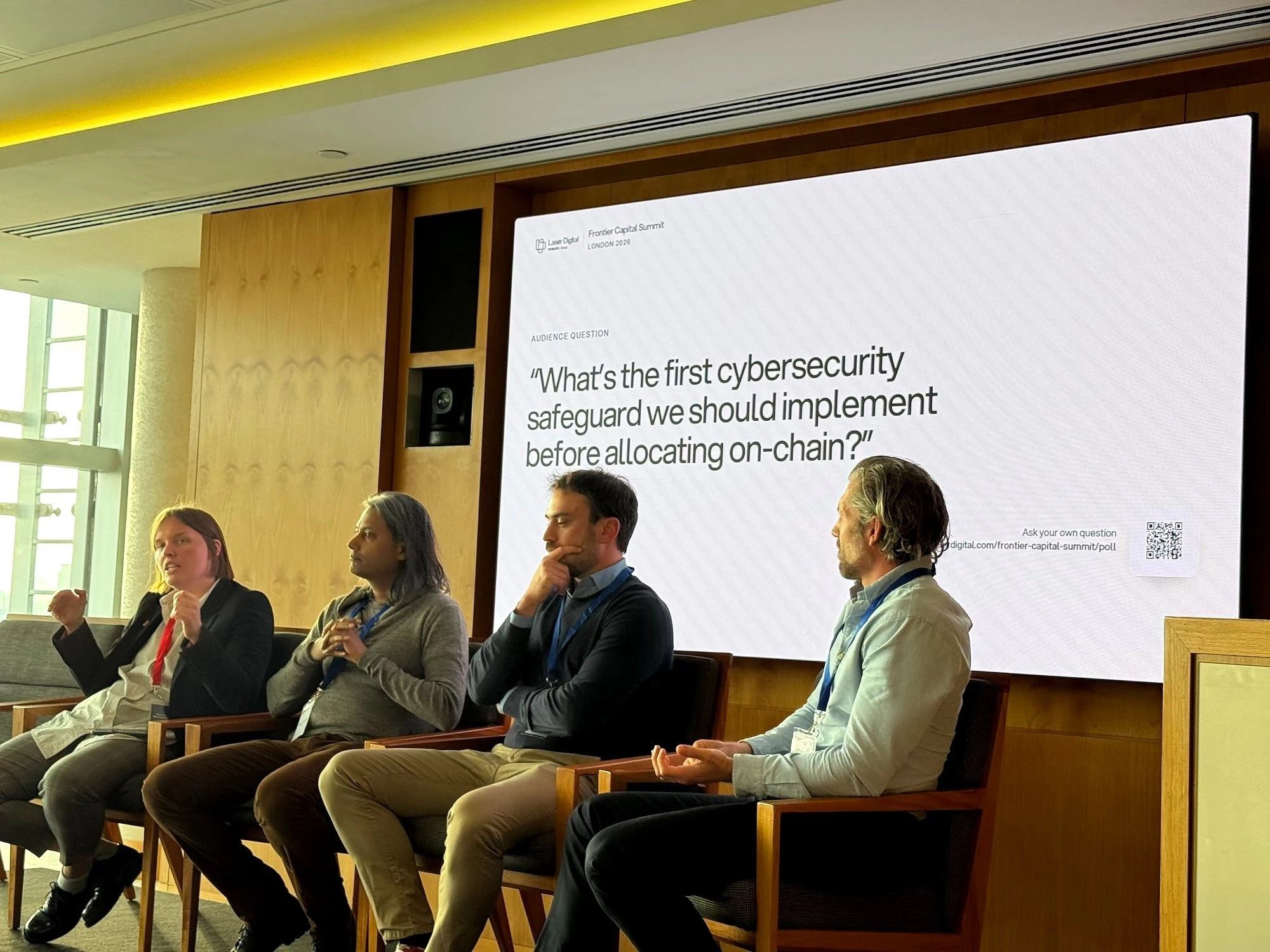
Turning to operational plumbing and security, Serena Wadsworth, Head of Digital Asset Security at Laser Digital, brought together Dr Pinku Surana (Chief Technology Officer, KAIO), Matteo Pandolfi (Co-Founder and CEO, Pareto) and Andrew Gibb (CEO, Twinstake).
Pandolfi stressed a structural rule that traditional fund managers already live by: a vault's redemption terms must match the liquidity profile of the assets it holds. On cybersecurity, Surana identified social engineering, rather than purely smart contract bugs, as the single largest attack vector facing teams today. For Gibb, repeated operational and security lapses remain a persistent drag on institutional confidence: "We can talk about benefits of vaults and onchain finance all day, but we keep scoring these own goals consistently that continue to push us back."
US policy after the midterms: J. Christopher Giancarlo
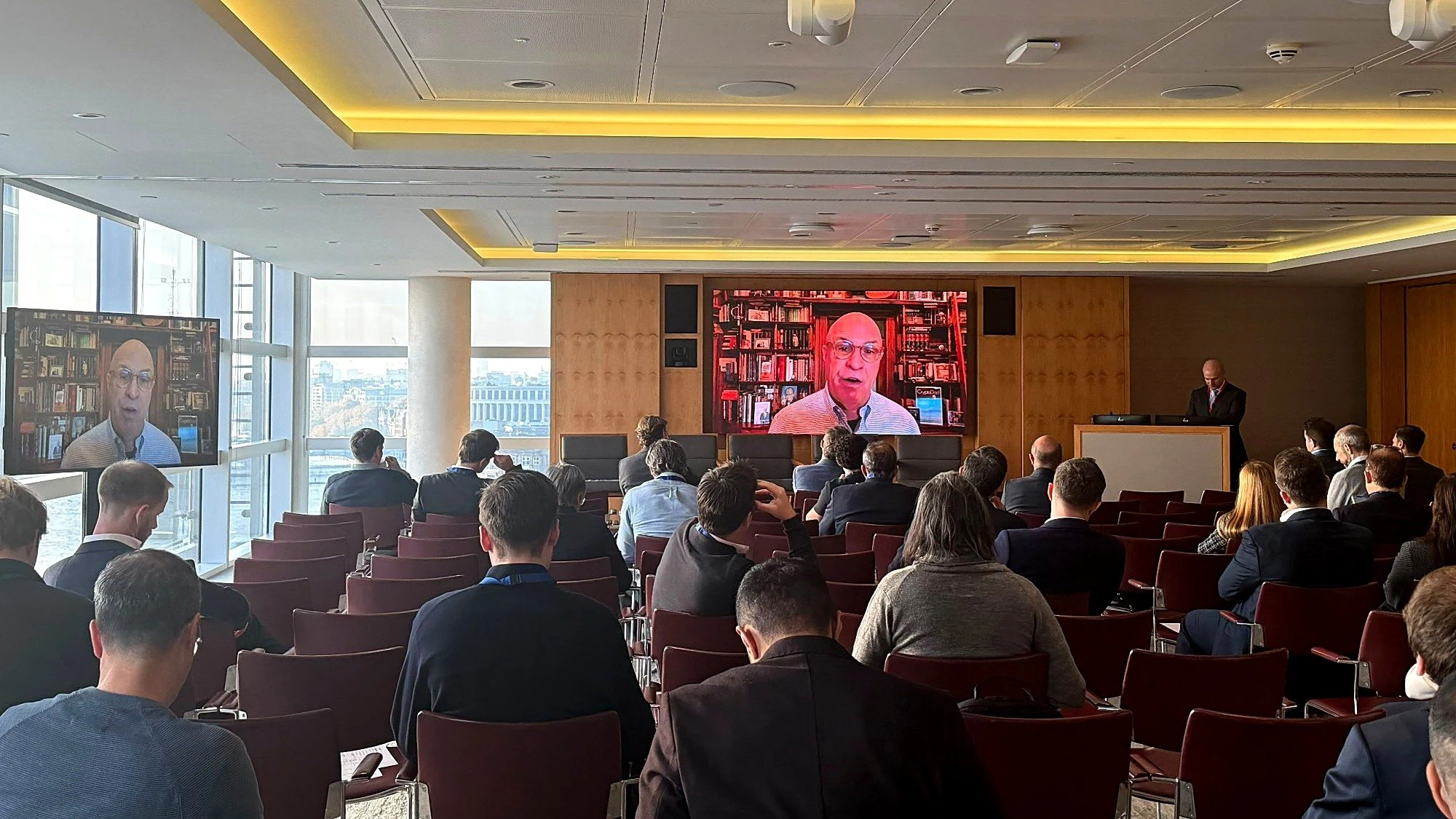
In a video address from Washington, former US Commodity Futures Trading Commission Chairman and Laser Digital strategic adviser J. Christopher Giancarlo assessed what the US midterm elections mean for digital assets. Bipartisan stablecoin legislation remains intact, he noted, and tokenisation continues to sit within established securities and commodities law. Where the outlook has grown less certain is broader market-structure legislation, the statutory treatment of DeFi and rules resting on agency guidance rather than statute. As he put it: "A rule built on interpretation is a house built on sand."
Even so, Giancarlo argued that the shift toward tokenised market infrastructure does not turn on a single election cycle: "Elections change majorities. They rarely change the direction of technology."
Session 4: Accessing vaults and proof of reserve
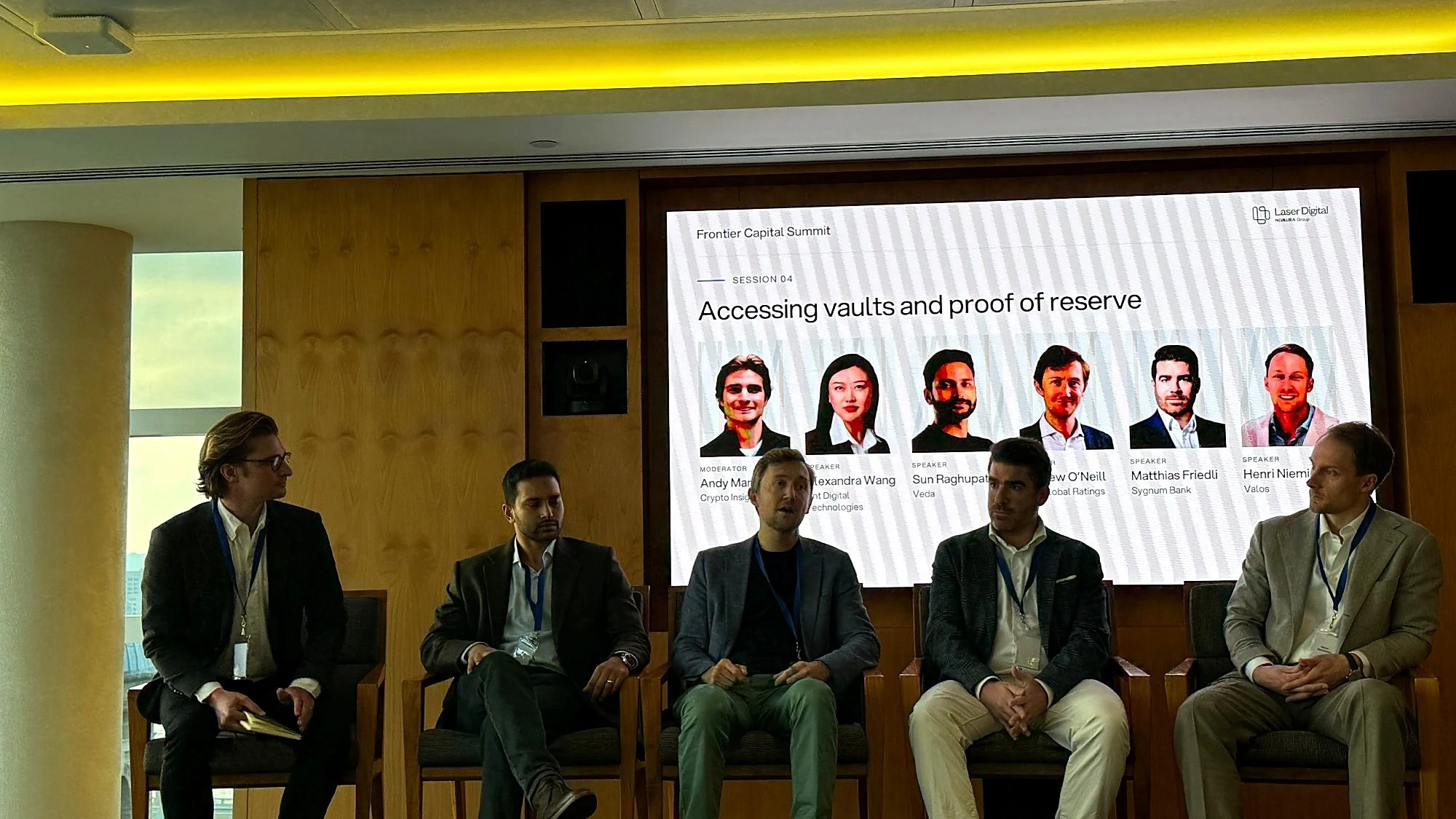
Why have fintechs moved faster than traditional asset allocators, and what turns a transferable vault token into genuinely liquid collateral? Andy Martinez (Founder and CEO, Crypto Insights Group) explored those questions with Sun Raghupathi (Co-Founder and CEO, Veda), Andrew O'Neill (Managing Director, Analytical Lead on Digital Assets, S&P Global Ratings), Matthias Friedli (Head of Institutional Clients, Sygnum Bank) and Henri Nieminen (CEO and Co-Founder, Valos).
Alongside the gap between technical transferability and real secondary liquidity, the panel examined the practical friction inside institutional investment committees. Vault structures still sit outside standard due diligence playbooks, Friedli explained, leaving early adopters exposed to asymmetric career risk:
"If you go to your committee and say, look, I want to deploy to that vault: if it works out, great. If not, your job is on the line."Matthias Friedli, Head of Institutional Clients, Sygnum Bank
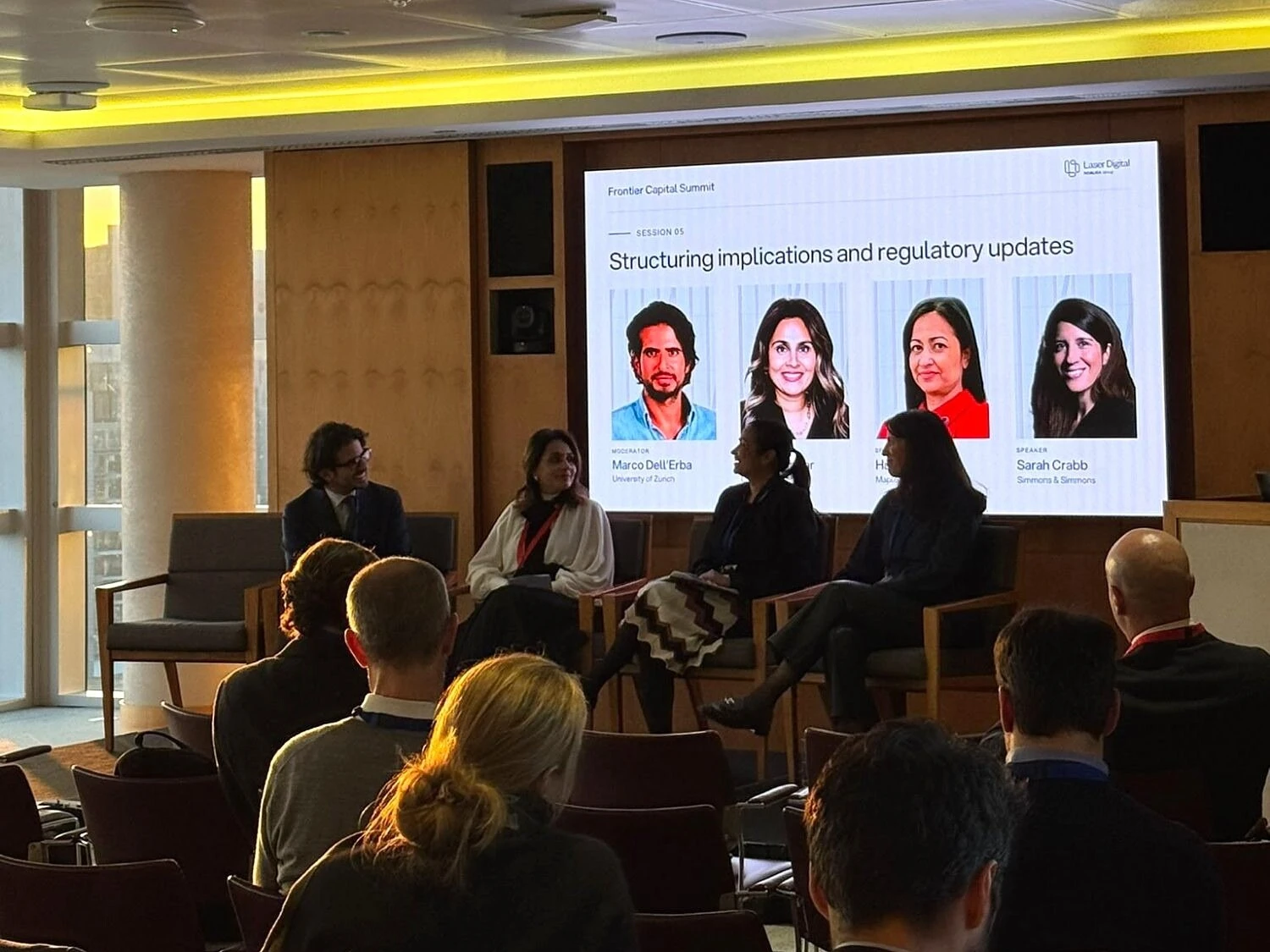
Session 5: Structuring implications and regulatory updates
The final panel examined how existing fund and derivatives regimes already reach onchain structures. Chaired by Professor Marco Dell'Erba of the University of Zurich, the discussion brought together Purvi R Maniar, Group Chief Legal Officer at Laser Digital, Harjit Kaur, Partner and Head of Funds and Investment Management at Maples Group, and Sarah Crabb, Partner at Simmons & Simmons.
On the regulatory perimeter, Crabb noted that UK rules can bite earlier than many builders expect once a pooled vehicle has an identifiable curator, while Maniar pointed to CFTC guidance enabling regulated firms to treat tokenised collateral on equal footing with its traditional equivalent. In Cayman tokenised fund structures, Kaur added, the statutory register continues to prevail over the onchain record, and governance liability remains firmly with the board or general partner: "You can outsource the work, you can't outsource the regulatory responsibility."
Closing remarks and outlook
Closing the summit, Vianelli anchored the case for onchain asset management around three areas: operational efficiency, distribution and transparency. Looking to the next 12 months, Duritza identified liquidity as the defining open question, noting that curators will be judged on their bad days as well as their good ones:
"There really isn't anyone that has an extended track record in this space in a curator capacity. That includes us."Adam Duritza, Global Head of Asset Management, Laser Digital
That candour captured the tone of the afternoon. Institutional adoption of onchain vaults will not be decided by token wrappers alone, but by whether curators, originators and infrastructure providers meet the standards of governance, valuation, liquidity and regulatory accountability that allocators already require offchain.
The summit programme and speaker archive are available at laserdigital.com/frontier-capital-summit, where prospective attendees can also register interest for 2027.
About Laser Digital
Laser Digital is a full-spectrum digital finance company, powering institutional participation in the on-chain economy. We do this through active management of yield-bearing crypto funds, sophisticated OTC trading strategies & structured treasury management solutions, built on fully compliant infrastructure. Nomura established Laser Digital to provide new value in digital assets to its clients, bridging traditional and crypto markets.
Website: www.laserdigital.com
For media & partnership inquiries: media@laserdigital.com
Legal Disclaimer
This is a marketing communication intended for professional investors in eligible jurisdictions only. It does not constitute investment advice or a recommendation. Past performance is not a reliable indicator of future results. Forecasts are not reliable indicators of future performance. Capital is at risk. Please consult the relevant offering documentation before making any investment decisions.
For full disclosure: https://laserdigital.com/marketing-disclaimer/